About us
Genesis Block has been developing software, implementing payment systems, and web-based software solutions for e-commerce and business since 2010. Our solutions work successfully in banks, payment systems, blockchain and crypto projects.
Genesis Block has been developing software, implementing payment systems, and web-based software solutions for e-commerce and business since 2010. Our solutions work successfully in banks, payment systems, blockchain and crypto projects.
Genesis Block is the zero block in the creation of a blockchain — a decentralized blockchain system. Our specialists are pioneers of the blockchain technology market for business purposes in Russia. The Genesis Block blockchain platform is a multi-asset, multi-emitent decentralized blockchain system based on a fast consensus of DOPS (delegated proof of stake, proof of a delegated share.) Unlike public anonymous blockchains used in cryptocurrencies, our blockchain fully complies with the legislation, can work with an EPC certified in the Russian Federation, is available in terms of transaction costs, easily scalable to a large number of participants and oprations!
Genesis Block is the zero block in the creation of a blockchain — a decentralized blockchain system. Our specialists are pioneers of the blockchain technology market for business purposes in Russia. The Genesis Block blockchain platform is a multi-asset, multi-emitent decentralized blockchain system based on a fast consensus of DOPS (delegated proof of stake, proof of a delegated share.) Unlike public anonymous blockchains used in cryptocurrencies, our blockchain fully complies with the legislation, can work with an EPC certified in the Russian Federation, is available in terms of transaction costs, easily scalable to a large number of participants and oprations!
GBLedger Platform Modules
Advantages








Platform Architecture
Business Application Layer
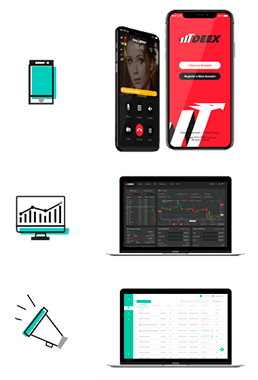
This is where the platform client is located, which allows you to manage access rights, carry out all types of transactions, and monitor network activity. This layer also contains the customer’s applications that use blockchain to automate business processes, sending and receiving data from a distributed registry.
Exchange / voting platform/ cryptomessenger.
Integration layer
This layer contains integration adapters for data access, as well as tools for embedding the platform into the existing IT landscape of the company. The authorization service restricts access to the data of integration services, and also allows you to use the company’s existing credential management services to work with the blockchain. The data service provides processed data from the blockchain in a relational form wich is more familiar to most developers.
API, res/net/ documentation.
The Blockchain layer
The main mechanisms that guarantee the uniformity and immutability of the distributed registry data work on this layer. The data received by the knives from each other is pre-checked. Then, depending on the current role of the node (whether it is a block generator), it either forms a block from the received data, signing it using a cryptographic module and its keys, or adds the verified data to the state. The current role of the node is determined using a consensus algorithm. There are two push-pool interfaces available for external access to the blockchain (GRPC and Rest API).
Nodes
Network Layer
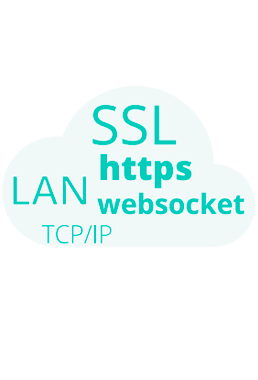
On the network layer nodes exchange data over TCP, having previously established an authorized connection that verifies the node’s right to join the network. The data is transmitted as a byte sequence. Nodes exchange data about transactions, blocks, microblocks, addresses of other network participants known to them, and other service information. On this layer, nodes also exchange private data via encrypted p2p connections similar to TLS.
LAN, TCP/IP, websocket, SSL, https
Business Application Layer
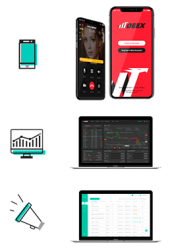
This is where the platform client is located, which allows you to manage access rights, carry out all types of transactions, and monitor network activity. This layer also contains the customer’s applications that use blockchain to automate business processes, sending and receiving data from a distributed registry.
Exchange / voting platform/ cryptomessenger.
Integration layer
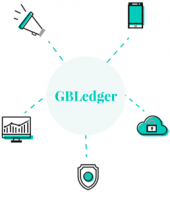
This layer contains integration adapters for data access, as well as tools for embedding the platform into the existing IT landscape of the company. The authorization service restricts access to the data of integration services, and also allows you to use the company’s existing credential management services to work with the blockchain. The data service provides processed data from the blockchain in a relational form wich is more familiar to most developers.
API, res/net/ documentation.
The Blockchain layer
The main mechanisms that guarantee the uniformity and immutability of the distributed registry data work on this layer. The data received by the knives from each other is pre-checked. Then, depending on the current role of the node (whether it is a block generator), it either forms a block from the received data, signing it using a cryptographic module and its keys, or adds the verified data to the state. The current role of the node is determined using a consensus algorithm. There are two push-pool interfaces available for external access to the blockchain (GRPC and Rest API).
Nodes
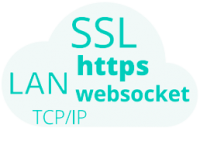
Network Layer
On the network layer nodes exchange data over TCP, having previously established an authorized connection that verifies the node’s right to join the network. The data is transmitted as a byte sequence. Nodes exchange data about transactions, blocks, microblocks, addresses of other network participants known to them, and other service information. On this layer, nodes also exchange private data via encrypted p2p connections similar to TLS.
LAN, TCP/IP, websocket, SSL, https
Applications and Tools
 Client — Blockchain Management
Allows to view data, publish and execute smart contracts, grant rights, connect and disconnect nodes, work with private data.
 Authorization service
Manages access to the platform’s integration API and user rights, and integrates the platform with existing IDM, AD, and SSO systems.
 Data Service
Provides a convenient API for accessing blockchain data, as well as the data itself in SQL format, convenient for integration with existing application solutions.
 Smart Contracts Builder
A tool for the fast prototyping that allows to turn a visual UML model into a smart contract in a few clicks.
 Smart contract SDK
Allows you to focus on the implementation of business logic, since the necessary abstractions for working with the blockchain have already been written.
Blockchain
The Leased-Proof-of-Stake (LPoS) consensus algorithm is used in the public network, and Proof-of-Authority (PoA) and Crash Fault Tolerance (CFT) provide high speed in the private network.
The Waves Enterprise hybrid blockchain platform offers broad functionality and flexibility.
The ability to choose a cryptographic algorithm for network deployment depending on the information security requirements of the solution.
A public network with the same functionality as a private one can be used for storing private project statuses and anchoring.

Smart contracts written in any programming language of the user’s choice are executed in a portable standalone Docker container.

A blockchain browser that allows to manage users and their rights as well as develop and publish draft contracts.

It is possible to exchange confidential data in encrypted form between specific users, without publishing them on the general network.
Application possibilities