
Social network for the Muslim community: problems and solutions
Throughout the history of mankind, people have tried to receive information from sources they trust. Before the advent of the Internet such sources were well-known scientists, religious and political leaders, representatives of large communities and organizations. With the appearance of social networks, messengers and other sources through which we share our opinions and from which we get information, everything has changed. «Listening» to a person at the other end of a monitor or smartphone screen, we often do not think about the social weight he has and whether his opinion can be considered as reliable.
In a hadis by Imam Hassan Askari (may peace be upon him), the perniciousness of lies is stated in other words: «All the abomination, filth and vice were imprisoned in a room, the key to which is a lie» (Jami as-saadat). The connection between lies on the one hand and sins on the other is quite obvious. After all, a sinner in his essence cannot be an honest person, since if he tells the truth, others will find out about his sins, than he will incur shame and humiliation. Therefore, in the vast majority of cases, sinners resort to lies in order to hide their impious deeds in this way. But it never saves them, because one lie leads to the next, then the next. A person cannot lie all his life, therefore, in the end, the lie is revealed and the truth always triumphs. It can also be said that through lies, sinners try to give themselves freedom in committing sin, while truthfulness imposes obligations on them, preventing their bad offenses.
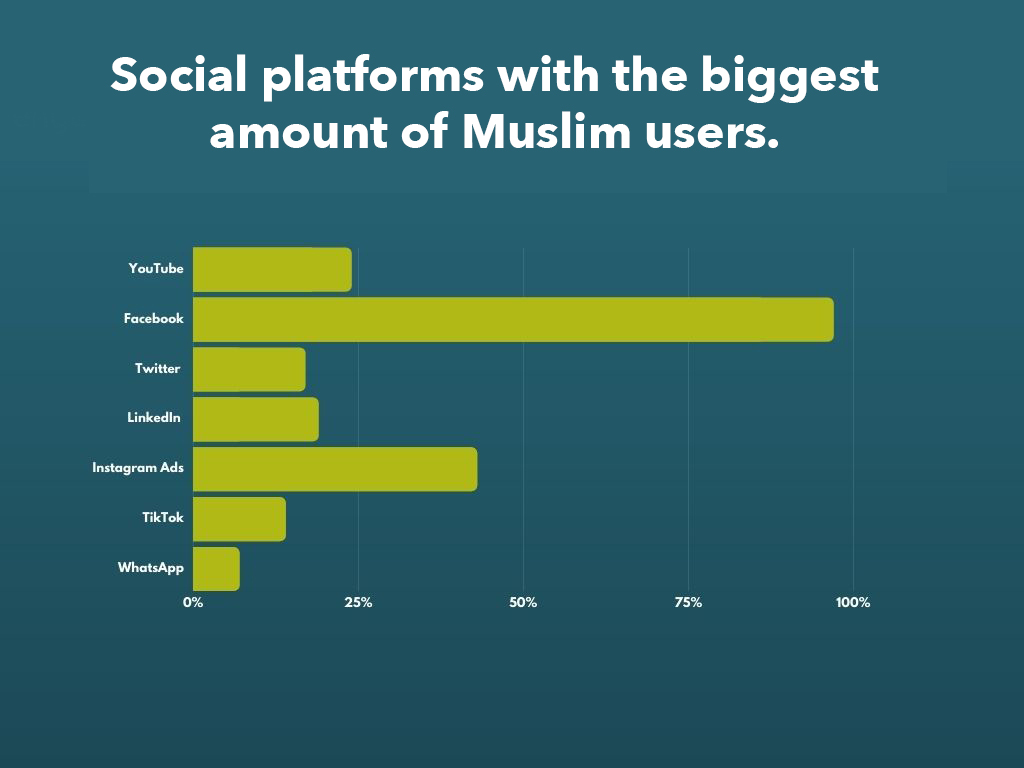
As in other regions of the world, Muslim-majority countries have recently seen the rapid spread and adoption of social media platforms such as Facebook, Twitter and YouTube. In the Arab world, Facebook is the leading social network with 81,302,064 users (for the end of 2021). After Facebook follows Twitter with 5,797,500 users. In terms of the number of daily views on YouTube, the Arab region is second only to the United States. In Saudi Arabia alone more than 3,000,000 videos are viewed daily. The popularity of social media platforms in the Arab world has led to the fact that some scholars expect their influence on religious life to increase. A common argument is that social media has the potential to change people’s religiosity and the practice of piety. It is believed that the influence of social networks on the religious behavior of individuals and communities characterized by conservatism and traditionalism is more profound than in communities characterized by liberalism and openness.
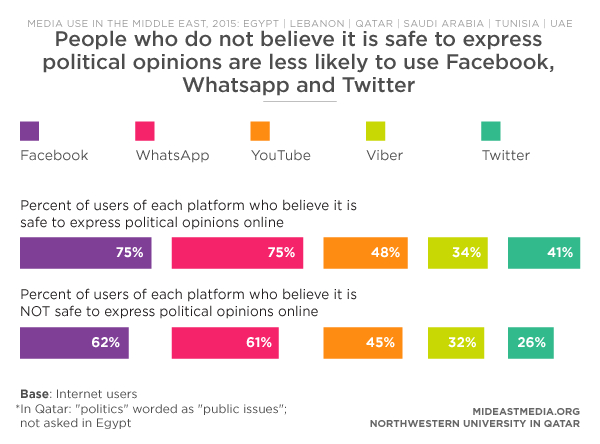
Communicating and winning the hearts and minds of believers in the information space is a central commitment for many Muslims and Islamic leaders. Abdul Aziz Al-Sheikh, the Supreme Mufti of Saudi Arabia, takes a critical position towards social media platforms such as Facebook and Twitter, because, according to him, they spread lies and can destroy existing relationships in the real world. Similarly, religious authorities in some Islamic countries have issued fatwas against the use of social networks such as Twitter, arguing that it is incompatible with Sharia law due to accusations of trafficking and propaganda of lies. And this is a great reason to think about creating Muslim social networks in which the laws of Islam will be used for the benefit of all people and will become a barrier to false and dangerous information for society.
Some conservative leaders of the Islamic world are calling for the creation and launch of halal social media platforms that comply with Sharia law. But what features should such online platforms have and how will they differ from the existing social networks used by Muslims?
The main goal of such media should be to unite Muslims into a single Umma (Arabic. أمة — community, nation). Once upon a time, Umma was an exclusively spiritual concept. It united Muslim communities divided by language and geography. Social media has broken down barriers and allowed young Muslims to communicate no matter where they are. For some digital activists, social media provides the means to reunite the amount digitally. Halal social platforms can contribute to the creation of virtual communities. Thus, the social network should support the global cohesion of believers creating connections between members of the community around the world.
When creating a social network capable of becoming a «digital home» for Muslims around the world, it is important to have functionality that would allow them to feel protected. Blockchain is the best way to implement a truly secure and reliable place to communicate and transfer information. Blockchain is a constantly replenishing decentralized digital «book», the records in which cannot be changed or forged. Unlike centralized online platforms where decisions about the reliability and reliability of publications always depend on their owners and management, blockchain can afford to be independent of censorship and manipulation. And this means that any word and any record within the blockchain becomes public in its original form.
Becoming basis for the creation of a halal social network, blockchain gives another advantage over numerous media that change the opinion of users in favor of a certain agenda. This is an opportunity to receive electronic fatwas from the leaders of the Islamic world. Such a document, certified by specially created Muslim committees and their signatures in the blockchain, is a very special way of showing trust. By receiving a fatwa for certain activities, for example, for collecting donations, creating thematic communities and other activities carried out within the framework of a social network, its users will receive a truly noteworthy source of information that meets Islam rules.
With the help of blockchain it is possible to create special tokens that can be used to vote for certain groups, users, and so on. By casting his vote for someone whom a person believes, he demonstrates to others his independence and exercises the right of choice granted to him. Such an approach to the realization of the rights and opportunities of each participant of the halal social network will make the mechanism for choosing moderators and opinion leaders really transparent and obvious to everyone.
Halal social network can become not only a source of information and communication between Muslims around the world. It is possible to implement a marketplace where users can sell and buy goods and services. This will be a great way to demonstrate skills and abilities, a place for self-expression and attracting attention to business.
The synergy of mass media and social networks should help Islam regain its place in modern public life. The continuous digitization of Islam, or the Islamization of the digital world, is a challenge to the religion of Islam in the twenty-first century, when closed systems resist openness, transparency and honesty. A halal social network can become a means of spreading sacred interpretations and digital fatwas, which will increase the credibility of the opinion of its users. A social network based on the basic principles of the Islamic world and using the latest technologies to facilitate and improve the development of the community is exactly what Muslims around the world need in order to show their unity and protect themselves from lies and imposed opinions.
What we propose
Having vast experience in the development and implementation of blockchain projects, we can implement a halal social network project with functionality capable of providing the Muslim community with everything necessary for safe and reliable communication, obtaining information and working with digital assets.
The uniqueness of this solution lies in the fact that users are given the opportunity not only to communicate with each other, communicate, publish various kinds of content and leave comments, but also to perform commercial and financial transactions. One service will make it possible to become a social platform, a trading platform and unite Muslims by interests and open up new opportunities and prospects for them.
The technical implementation of the social network project can be carried out both on its own GBLedger blockchain and on the basis of the Cosmos/Tendermint blockchain. Tendermint is a consensus algorithm that has a reliable mechanism of resistance to unauthorized actions, known as «Byzantine falls». It is used in the Cosmos system of interconnected blockchains and was introduced in 2014 by programmer Jae Kwon, who aimed to avoid problems of high energy consumption in blockchain networks and create an «Internet of blockchains» for more reliable decentralized user interaction.
GBLedger is a unique and unparalleled blockchain platform for the development of industry solutions, changing the concept of transactional applications, and making them more productive, scalable and transparent. The platform supports business transactions of the main technological, financial, trade and production processes, and also allows you to create digital products, services and payment instruments, solving the tasks of accounting for mutual settlements between an unlimited number of system participants with guaranteed confirmation.
What users get
Registered users get a lot of opportunities that have significant value and significance:
- The prospect of getting acquainted with important, thematic information, as well as the possibility of publishing your own content, gaining credibility among community representatives.
- Establishing contacts of interaction and communication with people who have similar interests with you, establishing useful business contacts.
- Using decentralized server-client add-ons (dapps) in the interests of your own business.
- Management of Decentralized Autonomous Organizations (abbreviation DAO) and Decentralized Autonomous Communities (DAC).
Platform users can interact with each other using the following tools:
- Follow – subscribe to user-created content;
- Join – join the community;
- Trust is a social transaction through which they extend their network of trust to other accounts, people and organizations;
- Repost – create a post in your personal feed with a brief preview and a link to the re-published content;
- Upvote is a social transaction through which messages are evaluated;
- Downvote is the exact opposite of Upvote.If in the case of ordinary social networks, you register an account and come up with a password yourself, which you can replace if necessary, then here the access code is created only once. If you lose it, you will lose access to your account forever. The registration procedure itself is simple. You can create an account by clicking SIGN IN.
It is necessary to generate a unique account name and save Brainey in any way convenient to you. Your personal account is a blockchain account that you can access only with your Brainkey and nothing else.
After registering and creating an account, the user has the following opportunities:
- Creating and publishing their own content, as well as increasing their personal rating (the same indicator of «Importance»).
- Other users will be able to interact with your profile and your content, will be able to provide you with information and give fair criticism to published posts.
- Forming your own interests – this can be achieved by following the people and communities that you like.
- Vote for the manufacturers of the calculator blocks and nodes on the management page. An important point is not an opportunity, but the responsibility of each registered user.
The platform can use the latest AR/VR technologies that significantly increase user engagement. It can be used in a variety of interaction scenarios. For example, creating interactive profiles, full information about which becomes available when pointing the smartphone camera at the profile. The user can not only see detailed information about another user, group or community, but also interact with him: get access to contacts, rate and even contact via messenger.
In the marketplace, AR becomes one of the main incentives for buying. By receiving information about the product with the help of such a visual and functional way of interaction, loyalty increases and there is a deeper involvement in the social network. No other platform provides such functionality.
Читайте также:
>>> О КОМПАНИИ GENESIS BLOCK:
Компания Genesis Block – международный системный интегратор и разработчик финтех-решений, систем платежей и процессинга, систем биллинга и программных решений для ЖКХ, блокчейн-решений, веб-сайтов, порталов и мобильных приложений. Под брендом Genesis Block объединены компании, разработчики и сервисы, работающие на рынке с 2010 г. Качество наших сервисов подтверждается международной сертификацией по ISO. Входим в российскую ассоциацию программного обеспечения НП РУССОФТ. Genesis Block является постоянным главным спонсором и спикером на международных банковских и финансовых конференциях IFIN и ВБА (Вся Банковская Автоматизация). Аккредитованная IT-компания Минкомсвязи. Является членом РАКИБ (Российская Ассоциация Криптовалют и Блокчейна). С 2020 компания Genesis Block ведет собственную авторскую передачу на деловом телевидении ПРОБИЗНЕС. Являемся авторизованным официальным интегратором крупнейшей BPM / CRM системы Terrasoft.


