
The world practice of blockchain work in pension funds

Digital financial systems entered the new era of development with the advent of blockchain technologies which are already use in many economy sectors. Social and economic projects of state structures are considered as the largest users of the blockchain where digital transformation can become the main driving force for changing the interaction between citizens and state institutes.In 2020-2022, several important decisions were made and plans were developed for the introduction and development of digital fintech systems with the participation of the Basel Committee on Banking Supervision (BCBS), the Financial Stability Board (FSB), the International Securities Commission (IOSCO) and the International Organization of Pension Supervisory Authorities (IOPS). The initiatives of the latter are the most interesting, because this article will focus on the use of blockchain technologies in the work of pension funds and the practice of using distributed ledger systems in various countries of the world.
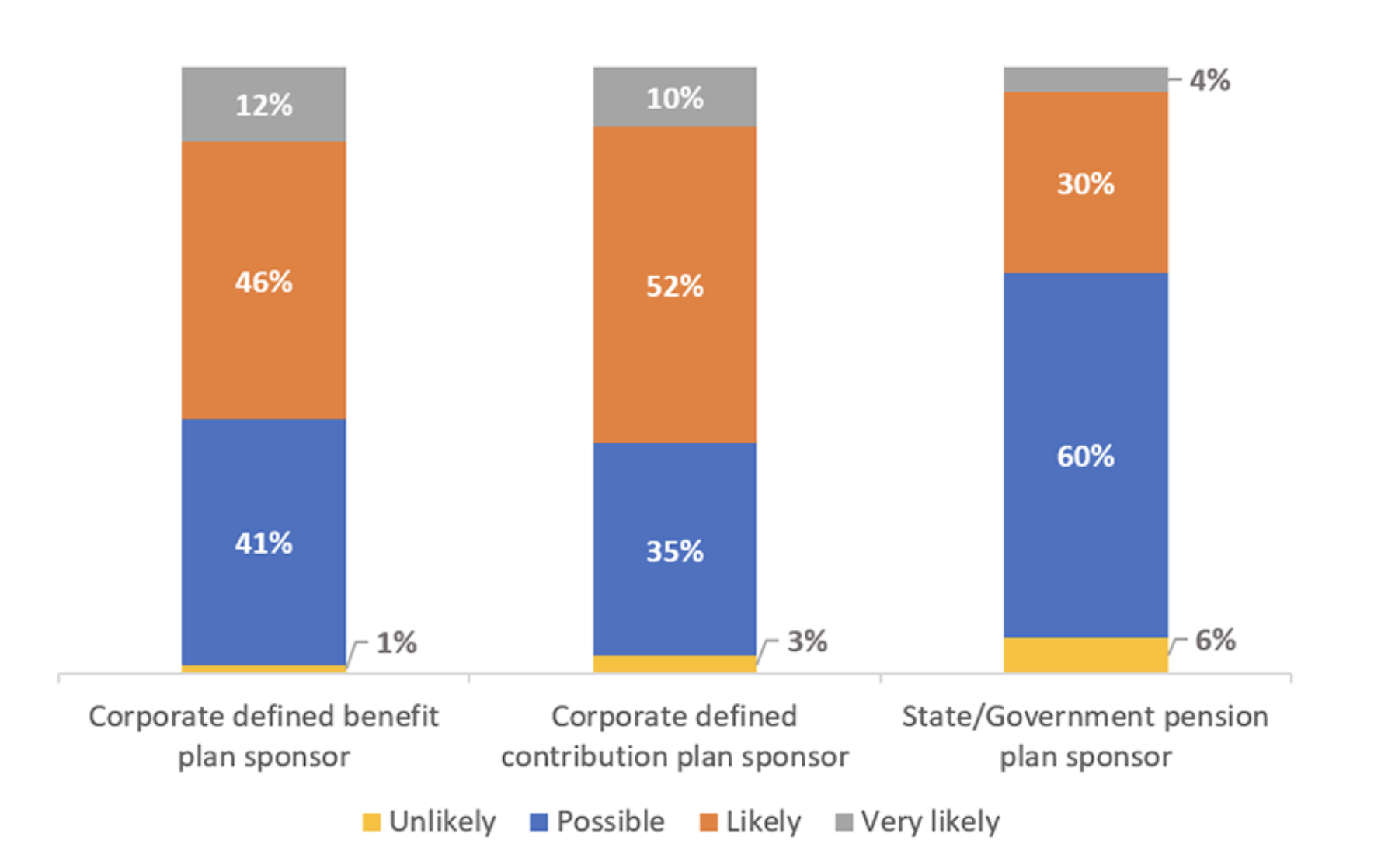
«How likely is it that you will achieve the target return over the next three years?» — survey conducted in 2020 among 5,000+ EC residents who are clients of pension funds showed the following results.
Financial innovations caused by the technological development of blockchain-based fintech systems open up a lot of opportunities for the operation of state and non-state (commercial) pension funds. Digital innovations can help to increase their efficiency by increasing competition and a variety of new schemes and business models, in which the usual mechanisms of work are replaced by blockchain smart contracts, the speed of payments and transactions, the number of intermediaries is reduced and administrative and operational processes are significantly optimized.
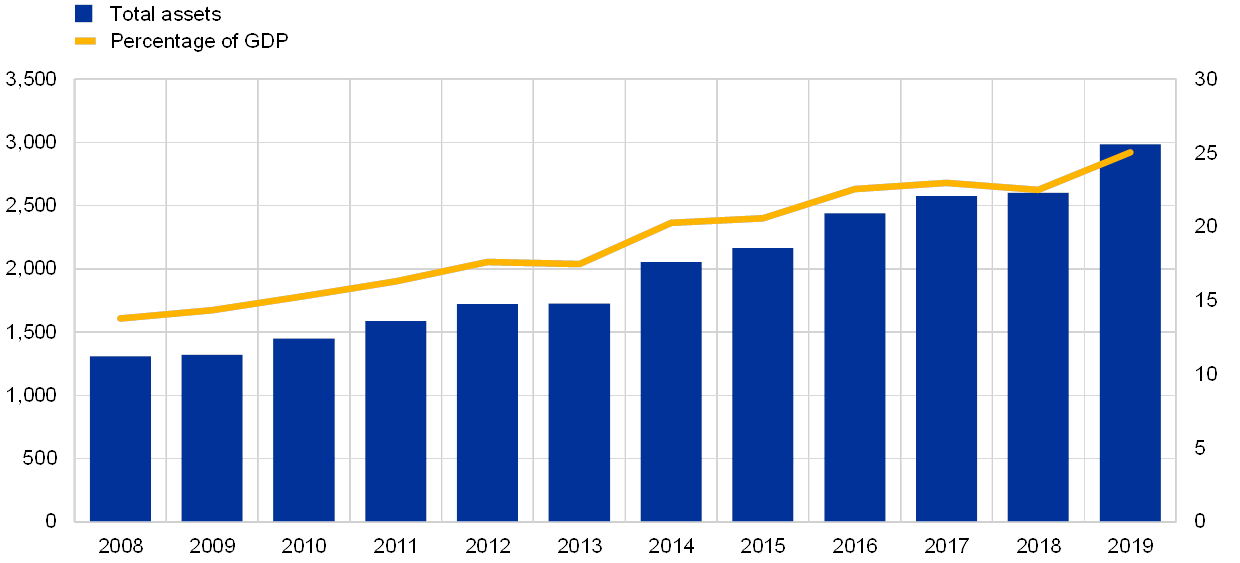
For government agencies including supervisory commissions, blockchain technologies can offer new opportunities in the field of data collection, registration (issuance and registration of licenses, recording of digital identification, etc.) and data analysis. The benefits for consumers of public and private pension funds are also obvious: increased confidence in the non-state pension system, easier access to information and greater transparency of work necessary for decision-making.
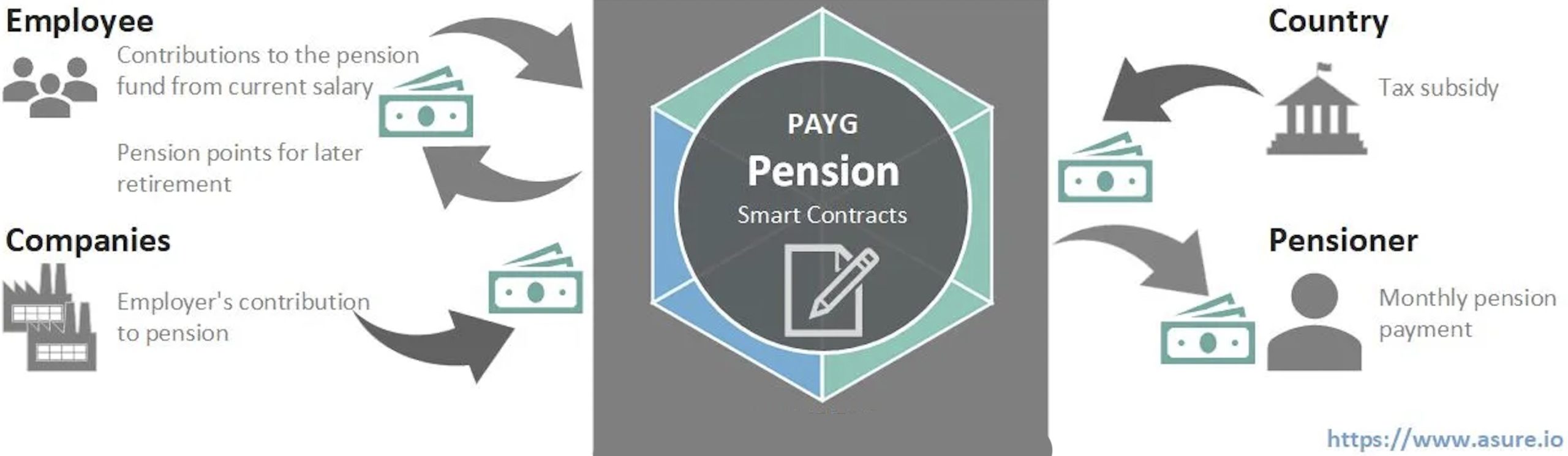
The scheme of the pension fund with the use of blockchain
The development of mobile and web applications using blockchain technologies in the field of non-state pension insurance and pension accumulation is becoming an increasingly common practice. In all IOPS jurisdictions, private pension provision is perceived as an extremely complex issue requiring difficult decisions and a certain risk. Funds that are part of IOPS and have the appropriate jurisdiction consider new digital systems as a possible way to help attract private pensioners and help them make the necessary decisions that contribute to effective retirement planning.
In the province of Ontario, Canada, since 2019, a digital online system has been introduced that uses smart contracts to fulfill the terms of pension contracts with employers and employees of companies.
In Chile, in 2020, blockchain also began to be used as a base for a pilot project facilitating the payment of pensions, medical benefits and insurance premiums. To date, the service processes about 76% of pension payments in the country and has already proven its effectiveness in reducing transaction costs and securely storing data about system participants.
In the context of digital transformation in the private pension sector, it is important to emphasize the role and efforts of pension supervisory authorities to raise awareness and develop their own digital tools that allow participants to track their current pension contributions and savings, as well as better retirement plan. One example is the application Foremóvi, created by the Mexican regulator, and mobile applications developed by MPFA in Hong Kong. In addition, MPFA has recently launched a fund performance platform on its website, offering easy access to key information and comparison of the performance of MPF pension funds.
Other IOPS jurisdictions (Australia, Chile, India, Netherlands, Turkey and others) are already implementing or analyzing the implementation of a blockchain to create digital identification numbers for access to public pension services and pension accounts. Austria offers access to public services and pension accounts (currently related only to first-level pensions) using an identity card or a special identification card (Bürgerkarte).
In the Netherlands, the development and implementation of a blockchain system for asset management of the two largest pension funds — APG and PGGM — is in the experimental stage. The aim of the project is to create ecosystems that will include pension funds, employers, service providers, supervisors and government agencies. The first stage of this joint experiment includes the development of pension administration based on blockchain. It uses a virtual database system in which changes and additions of information about savings and information about parties are also controlled by smart contracts. The project is still under development, but it has every chance to replace the existing mechanisms of pension funds in the country.
In Hong Kong, over the past few years, measures have been taken to standardize and automate the administration of the MPF scheme using blockchain. The Pension Supervisory Authority, MPFA, has implemented an electronic system (ePass) as a secure platform for automatic transmission of data on transfers of MPF benefits between trustees and launched a system of digital payments using smart contracts aimed at automating mutual settlements on transfers of accumulated MPF benefits between trustees. It is expected that with the help of blockchain technology, this platform will make fundamental changes in the administration of the MPF system.
With the development of digital technology and blockchain, pension funds around the world are beginning to explore how they can benefit from this revolutionary technology. In Canada, two major banks — rbc royal bank and td bank have teamed up with the teachers’ pension fund to launch a pilot project in which blockchain is used to track investments in real time. This initiative will allow members to constantly verify their investments and at the same time provide increased security thanks to the advanced encryption capabilities provided by blockchain technology. The United States has also taken steps to integrate blockchain into existing pension fund management systems. In 2019, the Employee Benefit Administration announced that it was working on a project that aims to use distributed ledger technology to track employee benefit information, such as medical savings account balances, retirement savings plans, stock options, etc. In addition, other organizations, such as fidelity investments, have started creating their own private blockchains to manage pension plans. As we move forward, it is likely that more and more countries will start exploring ways to use blockchain in their existing systems to improve efficiency and provide better services to their customers.
Switzerland’s financial system is known as a «safe harbor» for pension fund investors due to its strong economy, political stability and low taxes. In this country, they also began to introduce blockchain into the work of pension funds. The most striking example is the token solutions ag platform for tokenization of pension savings, which allows investors to tokenize their assets (pension fund investments) in a secure smart contract-based system. This platform allows investors to trade their assets quickly and safely without having to go through intermediate identification with brokers and pay additional fees.
Blockchain technology offers many potential benefits, including increased security, transparency, cost savings, scalability and increased data privacy, as well as increased speed and liquidity in retirement savings schemes. Blockchain-based pension funds offer a secure, transparent and cost-effective approach to managing retirement investments, which has the potential to revolutionize the way we manage our retirement accounts. As more and more funds learn about the benefits of this blockchain technology, they are likely to turn to it, as its secure infrastructure and increased transparency compared to other asset management systems available today provide investors with an additional level of security, as well as give them more control over their investments at a lower price compared to with traditional banking services or exchanges.
Читайте также:
>>> О КОМПАНИИ GENESIS BLOCK:
Компания Genesis Block – международный системный интегратор и разработчик финтех-решений, систем платежей и процессинга, систем биллинга и программных решений для ЖКХ, блокчейн-решений, веб-сайтов, порталов и мобильных приложений. Под брендом Genesis Block объединены компании, разработчики и сервисы, работающие на рынке с 2010 г. Качество наших сервисов подтверждается международной сертификацией по ISO. Входим в российскую ассоциацию программного обеспечения НП РУССОФТ. Genesis Block является постоянным главным спонсором и спикером на международных банковских и финансовых конференциях IFIN и ВБА (Вся Банковская Автоматизация). Аккредитованная IT-компания Минкомсвязи. Является членом РАКИБ (Российская Ассоциация Криптовалют и Блокчейна). С 2020 компания Genesis Block ведет собственную авторскую передачу на деловом телевидении ПРОБИЗНЕС. Являемся авторизованным официальным интегратором крупнейшей BPM / CRM системы Terrasoft.


