
State and prospects of the world carbon market

Carbon market which is the market in where a special carbon unit (UE) are traded. Traditionally they have a nominal value equal to 1 ton of CO2. There are two types of carbon units:
1. Carbon units that confirm the owner’s right to emit greenhouse gases (hereinafter referred to as GHG) into the atmosphere within the general quota established by the regulator;
2. Carbon units that confirm the reduction of emissions and/or increase in GHG uptake achieved as a result of the implementation of so-called carbon (climate) projects.
Carbon units of the first type are usually referred to as emission allowances. The second type of credits are the carbon credits or offsets (carbon credits, offsets).
Both types of these carbon units can be issued and traded on the market within the framework of legally formalized (enshrined in legislation) GHG emission control systems. Such systems can be created in accordance to the national, subnational (state, province, city), supranational or international level. In this case we’re talking about a regulated market of carbon units. These are the carbon markets of the EU, the UK, Germany, Canada, China, Kazakhstan, California, Quebec, etc.
An example of a regulated market for carbon units can also be the Upstream Emissions Reductions (UER) – the mechanism working in the EU countries which allows, within certain limits, to count emissions reductions from the extraction and transportation of fossil fuels achieved as a part of the implementation of projects by reducing GHG emissions down the supply chain associated with the activities of fuel companies (according toin fact, we are talking about GHG emissions from the use of liquid fuel supplied by companies by the end consumers). The mechanism was introduced within the framework of the EU Directive 98/70/EC of 13.10.1998 on the quality of gasoline and diesel fuel (as amended by the EU Directive 2015/652). The mechanism establishes the procedure for issuing and crediting special carbon units (UER) and the procedure for implementing climate projects to obtain them.
Climate project is a set of measures ensuring the reduction (prevention) of GHG emissions or an increase in GHG uptake relative to an established baseline describing the most likely scenario for the functioning of facilities included in the project boundaries in the absence of a project.
The most important criterion for identifying a project as climatic is complementarity. Its meaning is that the climate project provides a more significant reduction in GHG emissions (increase in absorption) than any other activity carried out in accordance with legislation or within the framework of normal commercial practice. There are special requirements for the justification of climate projects and their compliance, as well as the results achieved in the implementation of projects in the form of reducing GHG emissions (increasing absorption) is confirmed by an independent third party – the authorized body for the validation and verification of GHGs.
Currently, the requirements contained in the documents regulating project activities under Article 6 of the Paris Agreement are taken as the basis for the formulation of requirements for climate projects. More detailed information is available in the GUIDANCE NOTE on approaches to quantify, verify, validate, monitor and report upstream emission reductions.
In particular, Climate projects include the following options:
- Reduction of flaring of associated gas during oil production;
- Improving energy efficiency in oil production;
- Use of renewable energy sources in oil production;
- Reduction of GHG emissions by changing the way oil is transported from production sites to processing sites (e.g. truck-to-pipe).
The most advanced legislation on the UER mechanism was created in Germany. The rules for registering climate projects and obtaining the corresponding carbon units (UER certificates) are regulated by the Resolution on the Offset of Obligations under the UER with Quotas for Greenhouse Gas Emissions dated January 22, 2018. The authorized body for UER is the DEHST (Deutsche Emissionshandelsstelle).
According to the German law, both a German company subject to the requirements for reducing emissions from oil and gas fuel supplies and a foreign company implementing a project approved under the UER mechanism can register in the register to receive UER carbon units. Ownership of UER carbon units can be transferred to any organization registered in the UER registry.
An alternative to the regulated carbon market is a voluntary carbon market, which is formed outside the existing GHG emission control systems on the initiative of private organizations based on carbon standards developed by them, which allow to qualify and register projects as climate and release the corresponding carbon units into circulation.
The most well-known voluntary carbon standards that have received wide recognition and distribution in the world are The Gold Standard (GS) and Verified Carbon Standard (VCS), which account for about 85% of the voluntary carbon market, as well as the American Carbon Registry (American Carbon Registry, ACR), Climate Action Reserve (Climate Action Reserve, CAR) and Plan Vivo.
Gold Standard was developed in 2003 by the World Wildlife Fund (WWF), HELIO International and SouthSouthNorth in order to ensure long-term social, economic and environmental benefits from the implementation of carbon projects. Initially, the standard was focused on CDM projects provided for in Article 12 of the Kyoto Protocol, but since 2006 it has also been used for validation of carbon projects focused on the voluntary market.
In total, about 1,700 carbon projects have been registered under the Gold Standard, implemented in more than 60 countries, and about 134 million carbon units have been put into circulation (1 carbon unit = 1 ton of CO2-eq.). According to the requirements of the Gold Standard, applicants must confirm the environmental friendliness of the technologies used and demonstrate that the project contributes to sustainable development and provides associated environmental, social and economic benefits.
VCS (now Verra) is the most popular voluntary GHG emission reduction program, accounting for most of the carbon units released on the voluntary carbon market. The first version of the VCS standard was published in 2006, the current version of the standard has been in effect since 2019.
About 1,700 projects were implemented within the framework of this standard and the total reduction of GHG emissions amounted to more than 630 million tons of CO2-eq. To register a project in the Verra registry, it is important to comply with the chosen methodology, as well as with the general rules and criteria of the program, which are reflected in the standard and a number of other guidance documents. It is also possible to use methodologies approved under the Clean Development Mechanism (CDM) under Article 12 of the Kyoto Protocol to stimulate GHG emission reduction activities in developing countries.
In 2023, the forest-climatic projects registered on the Verra platform were severely criticized. The company was actually accused of fraud with the issuance of carbon units that were not provided with a real reduction in GHG emissions into the atmosphere. This has already led to personnel changes in the company’s management. The next step is likely to be the revision (tightening) of the applicable carbon standard and the procedure for validation and verification of carbon projects on the Verra platform.
In a few recent years there has been a trend towards integrating voluntary carbon standards into regulated markets through an accreditation mechanism or in another form. An example is the California GHG Emissions Trading System (CA ETS) which allows partial compensation of GHG emissions from regulated sources at the expense of carbon units issued in the American Carbon Registry (ACR), as well as on platforms such as Climate Action Reserve (CAR) and Verra. However, not any carbon units are allowed to be offset, but only those that are put into circulation as a result of the implementation of 6 types of projects:
- Reduction of methane emissions from animal husbandry;
- Mine the methane capture;
- Reduction of ozone-depleting substance emissions;
- Reduction of methane emissions from rice cultivation;
- Forest projects on US. forest lands;
- Urban forest projects.
Carbon units issued in accordance to the VCS and Gold Standard standards can be taken into account in carbon tax calculations in Colombia and South Africa, in certain provinces of Canada (Alberta and British Columbia) and in Japan (Saitama).
The ICAO-approved Carbon Dioxide Compensation and Reduction System for International Aviation (CORSIA) also allows for the possibility of compensating GHG emissions from international air travel using carbon units traded on the voluntary market, subject to the accreditation of relevant carbon standards in accordance with ICAO requirements. By now, 8 voluntary carbon standards have been accredited with ICAO, which airlines can use to compensate for their excess emissions for 2021-2023, and only 2 programs that can be used to compensate for emissions for 2024-2026.
Table 1. Voluntary carbon standards approved for use under the ICAO CORSIA scheme
| Pilot phase, 2021-2023 | The first phase, 2024-2026 |
| American Carbon Registry (ACR) Architecture for REDD+ Transactions (ART) China GHG Voluntary Emission Reduction Program Clean Development Mechanism (CDM) Climate Action Reserve (CAR) Forest Carbon Partnership Facility (FCPF) Global Carbon Council (GCC) The Gold Standard (GS) Verified Carbon Standard (VCS) | American Carbon Registry (ACR) Architecture for REDD+ Transactions (ART) |
The opportunity to use carbon units issued under voluntary standards (programs) to compensate for GHG emissions in GHG emission control systems of various levels (from subnational to international) gave a powerful impetus to the development of a voluntary carbon market and opened up new prospects for private initiatives in the field of reducing emissions and increasing GHG sequestration.
In 2021, the number of carbon units released into circulation increased by 48% compared to 2020, from 327 million units to 478 million units (1 piece = 1 ton of CO2-eq.). Particularly noticeable growth occurred in the segment of the voluntary market. The output of voluntary carbon units increased by 88% and provided almost three quarters of the total output of carbon units by the end of 2021. The share of the regulated market accounted for 26%, including the share of the CDM market – 11%, local carbon markets linked to the relevant emission control systems – 15%.
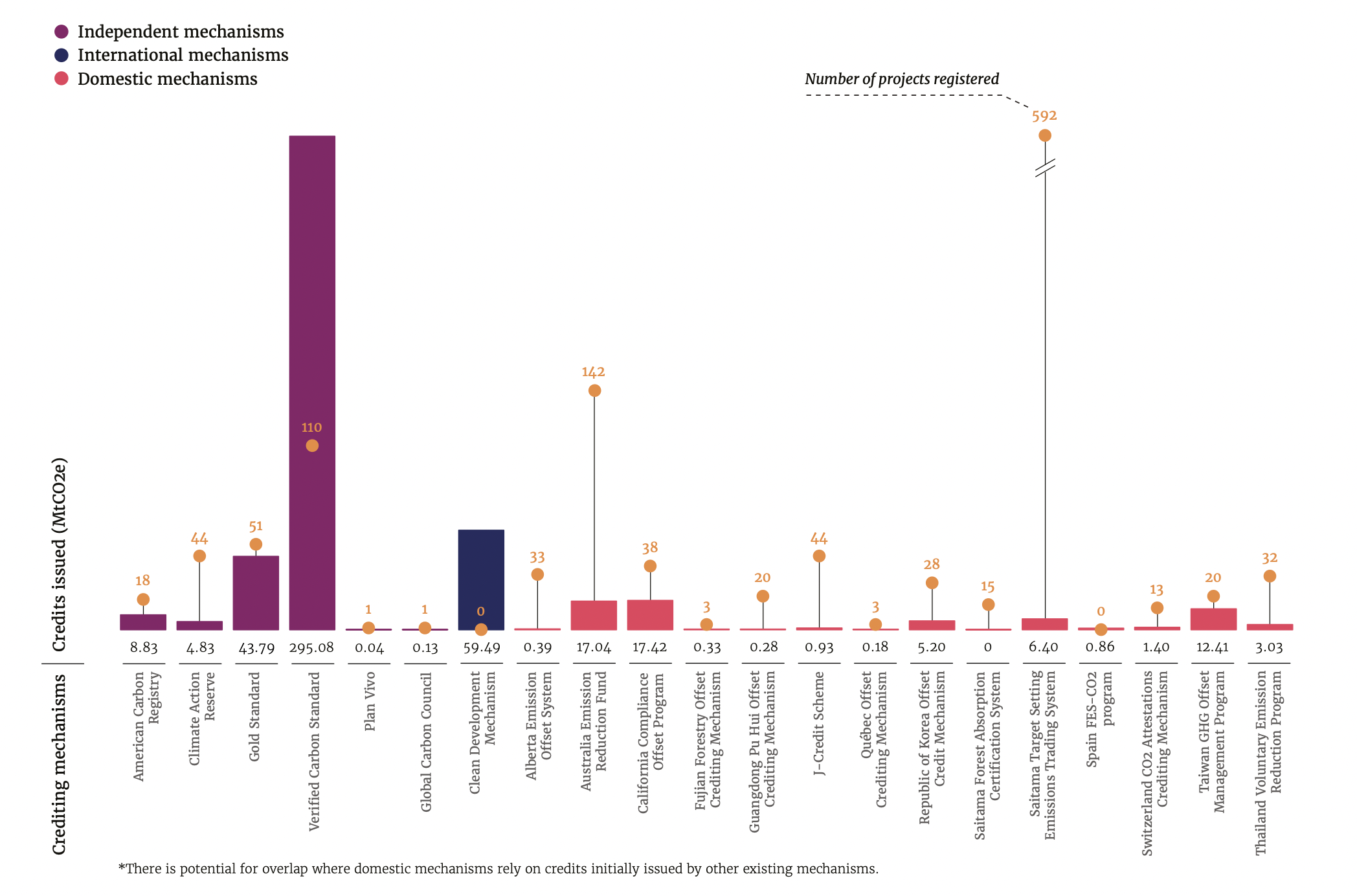
Fig. 1. Registration of carbon (climate) projects and issuance of carbon units in 2021. Source: The World Bank. State and Trends of Carbon Pricing, 2022
Prices for voluntary carbon units increased by an average of 60% in 2021. Together with the growth in sales of carbon units to compensate for GHG emissions, including within the framework of various GHG emission control systems, this provided a dizzying rise in the capitalization of the voluntary carbon market by almost 4 times, from $520 million to $1,985 million.
Additional information is available in Publication: State and Trends of Carbon Pricing 2022 by the The World Bank.
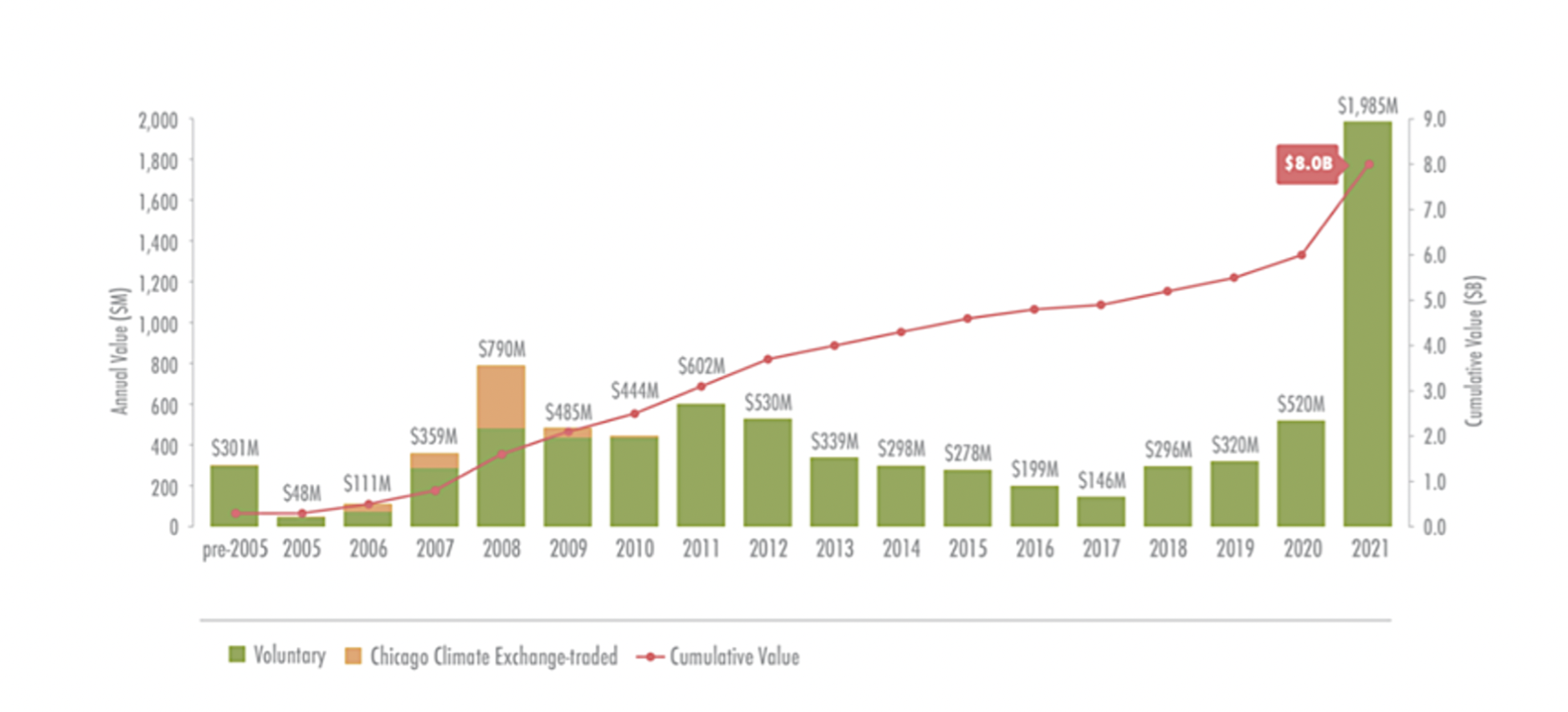
Fig. 2. Dynamics of the voluntary carbon market over the past 15 years Source: The Art of Integrity. State of the Voluntary Carbon Markets. 2022 Q3, August 2022
Within the regulated systems carbon units issued as a result of the implementation of climate projects can be used to compensate for GHG emissions in excess of quotas or other restrictions on GHG emissions established by issuers or to reduce the tax base on carbon tax (GHG emissions tax), which is levied from GHG issuers in accordance with the established procedure. Usually, a threshold is set – the maximum share of GHG emissions that can be compensated with carbon credits, and all projects used for this purpose must be approved by the regulator, which is equivalent to their admission to the regulated market.
In Russia, however, when creating a pilot system for GHG emissions quotas as part of the Sakhalin experiment to achieve carbon neutrality by the region, both of these rules were ignored. Projects to reduce emissions do not undergo any special selection, the decision on their compliance with the established requirements has been transferred to accredited validation and verification bodies, while the requirements for projects are formulated as generally and vaguely as possible (literally everything that is not directly prescribed by current legislation is suitable), and carbon units issued based on the results of project implementation it is allowed to compensate for any GHG emissions without restrictions.
Potentially, this could lead to the devaluation of emission quotas and the collapse of the carbon market, as, for example, happened in China at the initial stage of the development of the carbon market within the framework of the established national emission quota system. The European Union faced similar problems at the early stages of the establishment of the GHG emission quota system at the time. As a result, in China, the registration of new carbon projects and the issuance of carbon units for previously approved projects have been put on pause, and the European Union, within the framework of its emission quota system (EU ETS), has generally refused to offset carbon units released into circulation based on the results of project implementation.
At the same time, in Russia, climate projects are seen as almost the main mechanism for stimulating issuers to reduce GHG emissions. At the same time, it is assumed that for the purposes of reducing GHG emissions, issuing companies will develop and register climate projects, monitor the progress of their implementation, calculate and verify the achieved GHG emission reductions and issue carbon units on this basis. The description of these procedures occupies the lion’s share of the Federal Law No296-FZ On GHG Emissions Limitation adopted in 2021.
Meanwhile, in order to reduce their own direct and indirect GHG emissions, companies in most cases do not need to develop and execute special climate projects and undergo appropriate validation and verification procedures. GHG emissions reduction can be achieved within the framework of ordinary investment activities, and the results of project implementation can be reflected in the usual manner in carbon reporting as the difference between emissions before and after the project implementation.
At the same time, it should be borne in mind that the transfer (sale) of GHG emission reductions to third parties means refusing to offset these emission reductions «at home», for their own needs, decarbonization of production and/or «greening» of products supplied to the market. If not completely, then at least in terms of those emission reductions that correspond to the carbon units transferred to the side. And if carbon units are transferred to third parties outside the country, then the corresponding emission reductions should also not be offset by the country’s fulfillment of established national emission reduction goals (obligations), which should generally be confirmed by an official document issued by an authorized state body.
All this causes additional difficulties and entails additional costs, not to mention the costs associated with the validation and verification of the project, with the opening of an account in the carbon registry, the issuance of carbon units and transactions with them. In order to encourage investors to engage in such projects and to accept all these risks and costs, we need really serious economic incentives, and the main one is the opportunity to sell carbon units on the market at prices that justify the project costs and risks. And this is possible only if there is a demand. It is not necessary to count on the fact that there will always be foreign buyers for carbon units who are ready to buy everything that they are offered, especially in the current conditions. The real demand for carbon units can be based only on the requirements set by the regulator for the main emitters to significantly and in a short time reduce GHG emissions. This is confirmed by the entire history of the development of the global carbon market, including the experience of integrating voluntary carbon standards into formalized GHG emission control systems and the regulated carbon market.
Another driver of demand for carbon units may be the trend towards decarbonization («greening») products supplied to the market through a combination of measures aimed at reducing GHG emissions during production and in the supply chain, additional measures to reduce/prevent GHG emissions outside the supply chain, as well as measures to ensure the removal of carbon dioxide from the atmosphere. Especially if such products will be in high demand and additionally valued (receive premium to the price) compared with similar in their consumer properties, but more carbon-intensive products.
By now more than 2,000 companies around the world have set emission reduction targets, including achieving net zero, and have publicly committed to the corresponding commitments. However, despite the external similarity, the goals set by the companies and the commitments made to reduce emissions differ significantly in details, including the composition of the emissions taken into account, approaches to the formulation of the final goal, etc. In some cases, this leads to an excessive overestimation of the role of carbon credits in achieving the goals of deep decarbonization with net zero emissions or to the sale of low-carbon or even «carbon-neutral» goods, a significant part of the carbon footprint of which remains unaccounted for.
In the future, an increase in the number of companies proclaiming the achievement of net zero emissions as the ultimate goal of their climate strategy will inevitably lead to an increase in demand for carbon credits and to a further increase in their prices. It is estimated that by 2030, the demand for carbon credits will grow 15 times relative to 2020, up to 1.5-2 billion tons of CO2-eq., by 2050 – 100 times, up to 7-13 billion tons of CO2-eq).
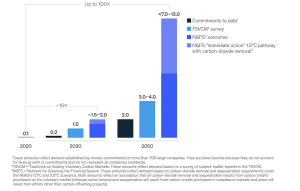
Fig. 3. Forecast of the dynamics of the voluntary carbon market 2030-2050. Source: McKinsey
To coordinate the development of the voluntary carbon market increase its liquidity and ensure compliance of voluntary carbon units released to the market with high quality standards, a special organization has been created by Global Carbon Trust (GCT). Carbon Storage Governing Council (Carbon Storage Governing Council, or Governing Council). The aim of the initiative is to turn the voluntary carbon market into a powerful tool for long–term reduction of emissions and increase of GHG sequestration through innovation, reduction of administrative and other barriers preventing new projects from entering the market, the introduction of standard short- and medium-term contracts for the purchase of carbon credits, improvement of carbon standards, organization of independent external monitoring, validation and verification of carbon projects, creation of a system of carbon arbitration and insurance of carbon transactions.
This will make it possible to transfer the voluntary carbon market to a solid professional basis on the type of modern financial markets and attract serious capital, creating a predictable, favorable environment for them and repeatedly reducing market risks, which is a necessary prerequisite for scaling the carbon market and solving with its help the challenges facing humanity in the field of mitigation of global climate change and prevention of the most dangerous climatic scenarios fraught with irreversible consequences and irreparable losses.
The GBLedger blockchain developed by Genesis Block uses exactly such a consensus algorithm in its work. And in addition to high environmental friendliness, it has a number of additional preferences.
According to a UCL (University College London) study, proof-of-stake networks consume much less energy – from two to three orders of magnitude less than Bitcoin. The same study says that PoS systems can contribute to solving problems related to climate change, and can even reduce the energy needs of traditional central payment systems, which gives hope that blockchain technology can still make a positive contribution to the fight against climate change.
PoS-based blockchains can also be used in projects of so-called green smart contracts. Green smart contracts open up new ways to combat climate change and overcome the negative consequences of its change. And this is already consistent especially in areas requiring the collection and verification of large amounts of data and the promotion of sustainable environmental behavior, such as regenerative agriculture, carbon offsetting, crop insurance, etc. Green smart contracts can make great promises in solving environmental problems, as they expand the scope of environmentally oriented blockchain-based solutions. And this is an excellent application for compliance with at least 7 and 12 Sustainable Development Goals declaring «Access to inexpensive, reliable, sustainable and modern energy» and «Ensuring rational consumption and production models».
Читайте также:
>>> О КОМПАНИИ GENESIS BLOCK:
Компания Genesis Block – международный системный интегратор и разработчик финтех-решений, систем платежей и процессинга, систем биллинга и программных решений для ЖКХ, блокчейн-решений, веб-сайтов, порталов и мобильных приложений. Под брендом Genesis Block объединены компании, разработчики и сервисы, работающие на рынке с 2010 г. Качество наших сервисов подтверждается международной сертификацией по ISO. Входим в российскую ассоциацию программного обеспечения НП РУССОФТ. Genesis Block является постоянным главным спонсором и спикером на международных банковских и финансовых конференциях IFIN и ВБА (Вся Банковская Автоматизация). Аккредитованная IT-компания Минкомсвязи. Является членом РАКИБ (Российская Ассоциация Криптовалют и Блокчейна). С 2020 компания Genesis Block ведет собственную авторскую передачу на деловом телевидении ПРОБИЗНЕС. Являемся авторизованным официальным интегратором крупнейшей BPM / CRM системы Terrasoft.


