
Can Bitcoin become «green»?

The consensus algorithm is a key functionality and feature of any blockchain network that defines a set of principles and rules, thanks to which all its participants (nodes) automatically come to agreement on the current state of the network. The implementation of these rules guarantees the reliability of all the data stored in it and allows to maintain the security of the blockchain.
Two main consensus algorithms – Proof of Work (PoW) and Proof of Stake (PoS) – are the most popular models of operation of the most public blockchains. Proof of Stake allows to confirm transactions in blocks depending on the number of coins you get and does not require a large amount of energy to maintain the system. PoW consumes a huge amount of energy for the operation of technical equipment used by miners (network nodes).
In the past few years, it has been environmental differences that have become one of the main reasons for disputes about the further viability of Proof of Work and led to the fact that in September 2022 the second most popular blockchain – Ethereum – finally switched on this algorithm. By becoming «green» Ethereum network has reduced energy consumption by more than 90%. Can a change of the algorithm of Bitcoin which consumes a huge amount of electricity, achieve similar results? We will tell you about this in our new article.
Before evaluating the possibilities of Bitcoin’s transition to a more environmentally friendly model, it is necessary to understand why the problem of energy consumption by blockchains is so relevant.
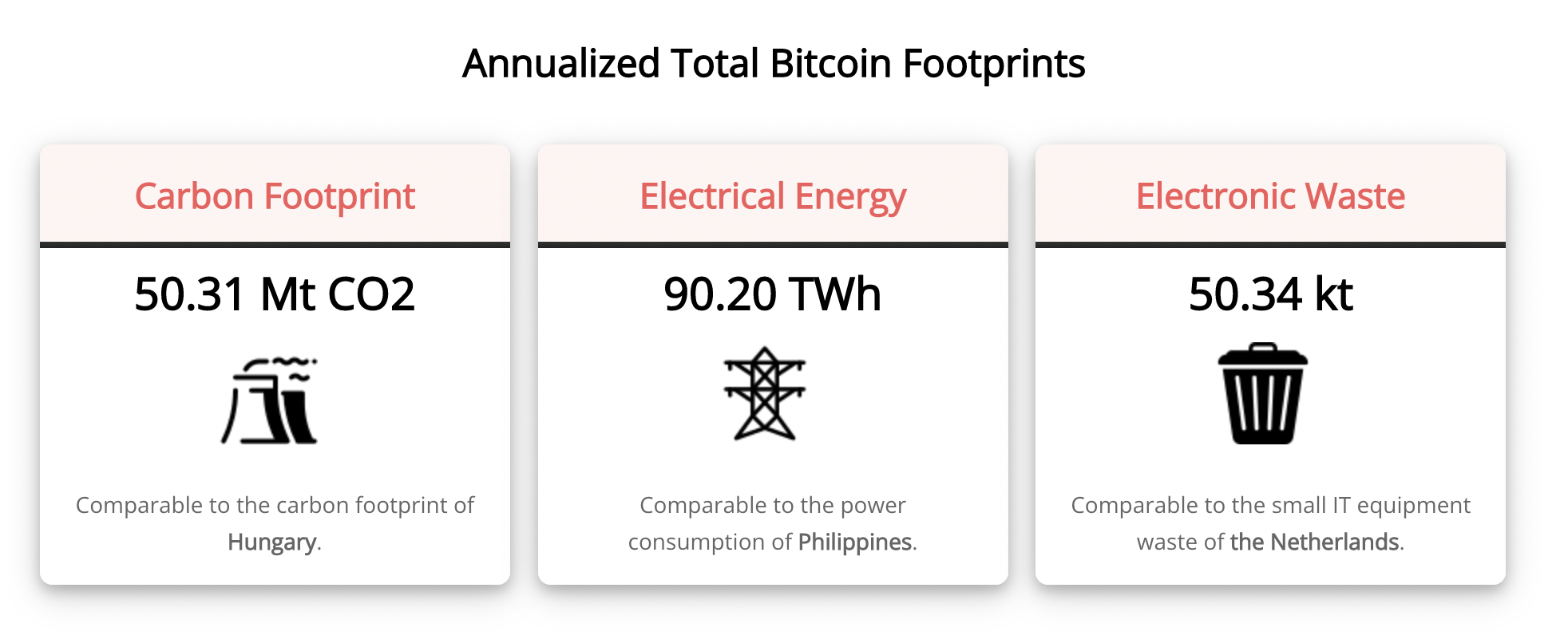
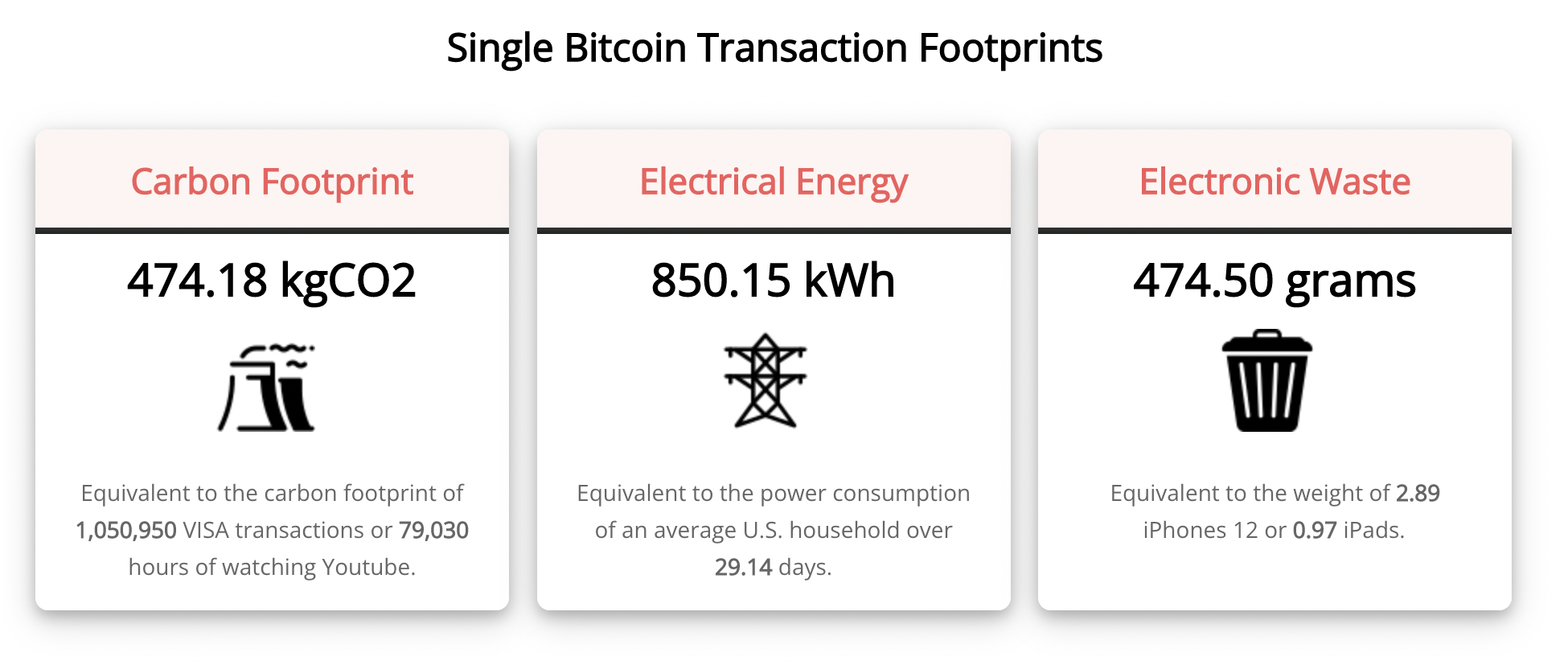
Bitcoin’ mining is a highly energy–intensive process that has become a «headache» not only for government agencies regulating the turnover of cryptocurrencies, but also for energy companies. After China banned mining in mid-2021 miners began to look for other areas of the world with cheap electricity which could not but affect electricity consumption and carbon emissions in various regions of the world. For example, in Kazakhstan, the work of miners was even able to paralyze the operation of power systems in certain regions which led to local power outages. In New York state, where miners occupied closed factories and empty warehouses, local residents began to complain about rising electricity bills and the high-frequency noise of the data center’ fans. In November, New York became the first state to impose a temporary ban on a new permits for mining cryptocurrencies at fossil fuel plants. The new state’s law also requires companies to study the impact of crypto mining on efforts to reduce emissions and.
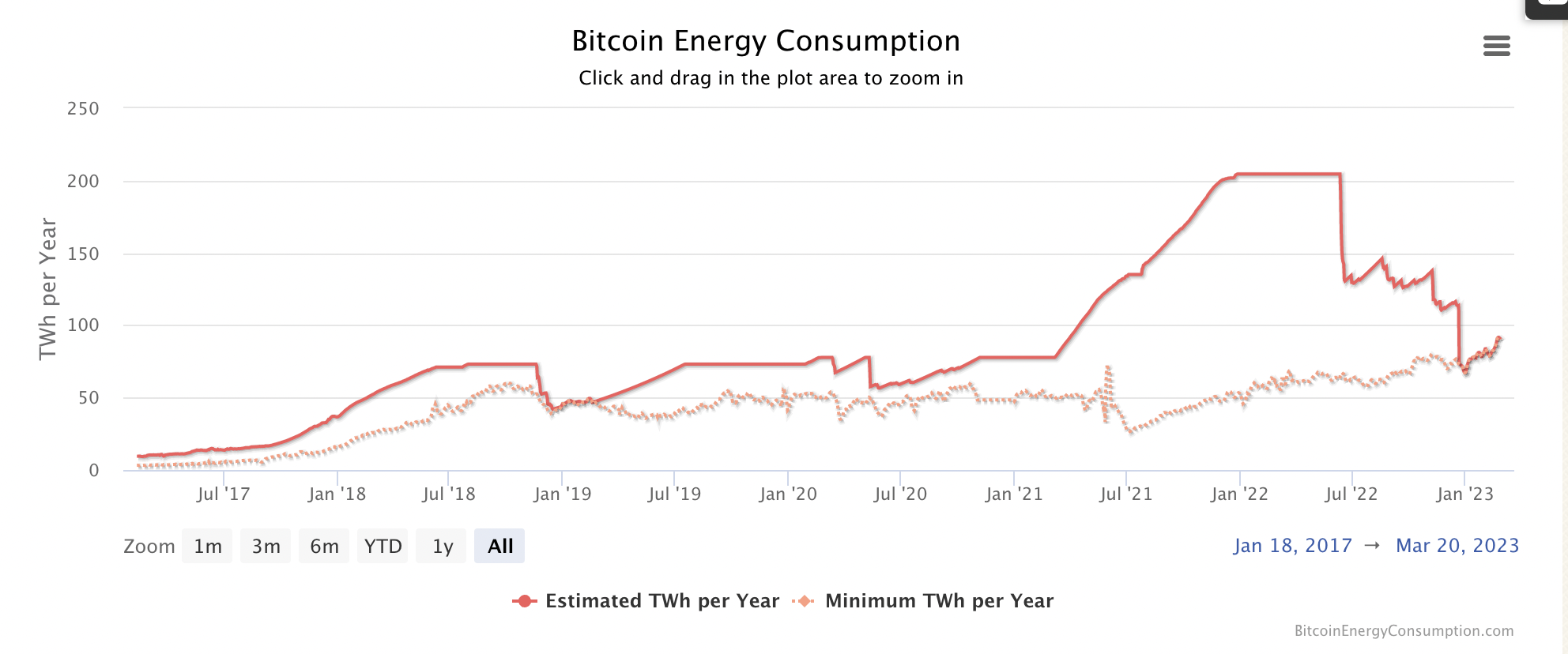
Should it continue? The answer to this question is obvious, we hope! Many countries, including Kazakhstan, Iran and Singapore have already imposed energy restrictions on crypto mining. In April 2023, the European Parliament will be ready to adopt a bill that will oblige crypto companies to disclose information about the impact on the environment. It is expected that this law will start to work in the beginning of 2024.
So why has Bitcoin not yet followed the path of Ethereum and switched to Proof of Stake?
Cryptocurrency systems do not have a control center, such as bank, which would control their work and create working standards. Consensus algorithms only confirm the «legality» of records in the blockchain, but do not affect the effectiveness of a single node of the network in any way. As a Proof of Work (the Proof of Work mechanism) on which Bitcoin is based, a worldwide network of computers known as “miners» spends electricity trying to win a kind of lottery. Whoever wins gets the opportunity to add the next block and get new coins. The chance of winning is directly proportional to the number of calculations performed by the miner.
Proof of stake eliminates this huge energy consumption. Instead of miners, Proof of stake systems use a huge number of “validators». To become a validator, you must make a deposit or “bet” a certain amount in coins. Placing bets gives validators the opportunity to verify new transaction blocks and add them to the blockchain so that they can receive rewards on top of their placed coins. The more coins you bet, the higher your chance to add next block to the chain. Both systems are strive to achieve the same goal but one uses electricity for it and the other uses coins. Both of them are decentralized in theory, but in practice the vast majority of bitcoin mining today is carried out with the help of five main mining pools. They are the ones who actually control the blockchain.
We can say that Bitcoin is just a network in which cryptocurrency circulates. Ethereum (and indeed systems based on the Proof of Stake algorithm) are platforms for smart contracts, decentralized applications, cryptocurrencies and NFT. Vitalik Buterin (Ethereum creator), always assumed that its platform would use Proof of Stake and eventually the transition to this algorithm took seven years. The issue of the Bitcoin blockchain is more of a political issue. In theory, a small group of people could take the reins of power into their own hands and transfer bitcoin to Proof of Stake. But despite the fact that this is an open source project, the modernization of the Bitcoin blockchain depends on decisions made by a small core team of developers known as «maintainers» or «custodians», whose actions are controlled and funded from private sources by influential companies such as Blockstream, Coinbase, the MIT digital currencies initiative group, organized by the MIT Media Lab and even government agencies.
Bitcoin is a closed «tin can», which is almost impossible to open. And although changes and updates are constantly being made to the Bitcoin code, its version 2023 is not much different from the version of 2009. One of the well-known bitcoin enthusiasts, Emin Gun Sirer, the creator of Avalanche, said in an interview: «The desire to change Bitcoin partly stems from an unwillingness to take any risk, and partly out of fear that such changes could ultimately undermine the cryptocurrency system itself.»
In fact, there are no technical obstacles to the transition of Bitcoin to Proof of Stake, but it is not possible to do this by a small group of enthusiasts right now. To do this, they would need the support of large miners who collect bitcoins worth more than $ 20 million a day. But they are unlikely to want to change something and abandon the existing business model. And that’s why enthusiasts have to create new currencies. The last time anyone tried to make major changes to Bitcoin was Bitcoin Cash, which tried to increase the block size to become a more useful tool as a real currency. Since 2015, the Bitcoin Cash network has become increasingly congested, the processing time and the cost of transactions have increased. A group of developers and miners proposed a simple solution: increase the transaction block size to two or eight megabytes so that Bitcoin can process more transactions per second.
But it was easier to be said than done. As David Gerard, author of the book «Attack of the 50 Foot Blockchain» wrote, even such a simple proposal led to a split in the community, numerous code forks, punitive DDOS attacks, death threats, a split between Chinese miners and American programmers, and other evidence that this and others problems in the Bitcoin protocol may never be fixed by changing the consensus algorithm. Even today, the emergence of Bitcoin Cash is called nothing else than «the uprising that led to the takeover.» Does this suggest that there is no particular reason to expect Bitcoin to ever go «green»? Nicholas Weaver, a researcher at the University of California at Berkeley and an outspoken critic of cryptocurrencies, is sure that this will happen sometime. «The only way to reduce Bitcoin’s criminal energy consumption is to destroy its very value. If one day this cryptocurrency becomes useless, its mining will stop,» says Weaver.
But even if Bitcoin does not want to change, there will always be developers and people who can create a truly valuable system that meets the needs of society and does not spend valuable natural resources for the sake of big profits. To do this, it is enough just to change the approach to the work of the blockchain and find common ground for the reasonable existence of the digital and real worlds. Genesis Block already clearly feels these points and is able to put the blockchain at the service of ecology.
The GBledger blockchain platform developed by Genesis Block DPOS is indispensable for creating highly loaded digital ecosystems. Due to the high speed of work, it can be used in a variety of economic and social spheres. One of the main purposes of GBledger was and remains the organization of crypto exchanges, platforms for trading and exchange of CFA and NFT assets and other projects related to new generation electronic finance.
Читайте также:
>>> О КОМПАНИИ GENESIS BLOCK:
Компания Genesis Block – международный системный интегратор и разработчик финтех-решений, систем платежей и процессинга, систем биллинга и программных решений для ЖКХ, блокчейн-решений, веб-сайтов, порталов и мобильных приложений. Под брендом Genesis Block объединены компании, разработчики и сервисы, работающие на рынке с 2010 г. Качество наших сервисов подтверждается международной сертификацией по ISO. Входим в российскую ассоциацию программного обеспечения НП РУССОФТ. Genesis Block является постоянным главным спонсором и спикером на международных банковских и финансовых конференциях IFIN и ВБА (Вся Банковская Автоматизация). Аккредитованная IT-компания Минкомсвязи. Является членом РАКИБ (Российская Ассоциация Криптовалют и Блокчейна). С 2020 компания Genesis Block ведет собственную авторскую передачу на деловом телевидении ПРОБИЗНЕС. Являемся авторизованным официальным интегратором крупнейшей BPM / CRM системы Terrasoft.


