
BLOCKCHAIN IN INTERNATIONAL TRADE

Development of the modern economy is inextricably connected with the use and implementation of new information and digital systems.
As the most reliable way of decentralized storage, blockchain technology becomes an increasingly popular mechanism in trade and economic relations between countries, creating an increasing need for the development of distributed registry systems devoid of the imperfections of traditional ways of working at all stages of interaction between the parties involved in these relations.
Factors contributing to increased demand for blockchain systems
- Improving the reliability and security of trading operations.
This factor is due to the high degree of reliability of the blockchain functions. It allows the parties involved into trade transactions to increase its reliability due to the immutability of the records stored in the blockchain and the impossibility of falsification.
The introduction of immutable originals of electronic certificates, licenses and declarations related to the supply of specific goods into the blockchain registry greatly facilitates regulatory procedures. In addition to the immutability of the entered data, the parties get access to the entire history of transactions and transactions necessary for operational tracking of the situation with the delivery of goods and payment. This is especially important for market competition where digital objects in paper form can be copied, modified and distributed almost free of charge. The immutability of the entered data in the blockchain registry makes it easy to authenticate products and documents.
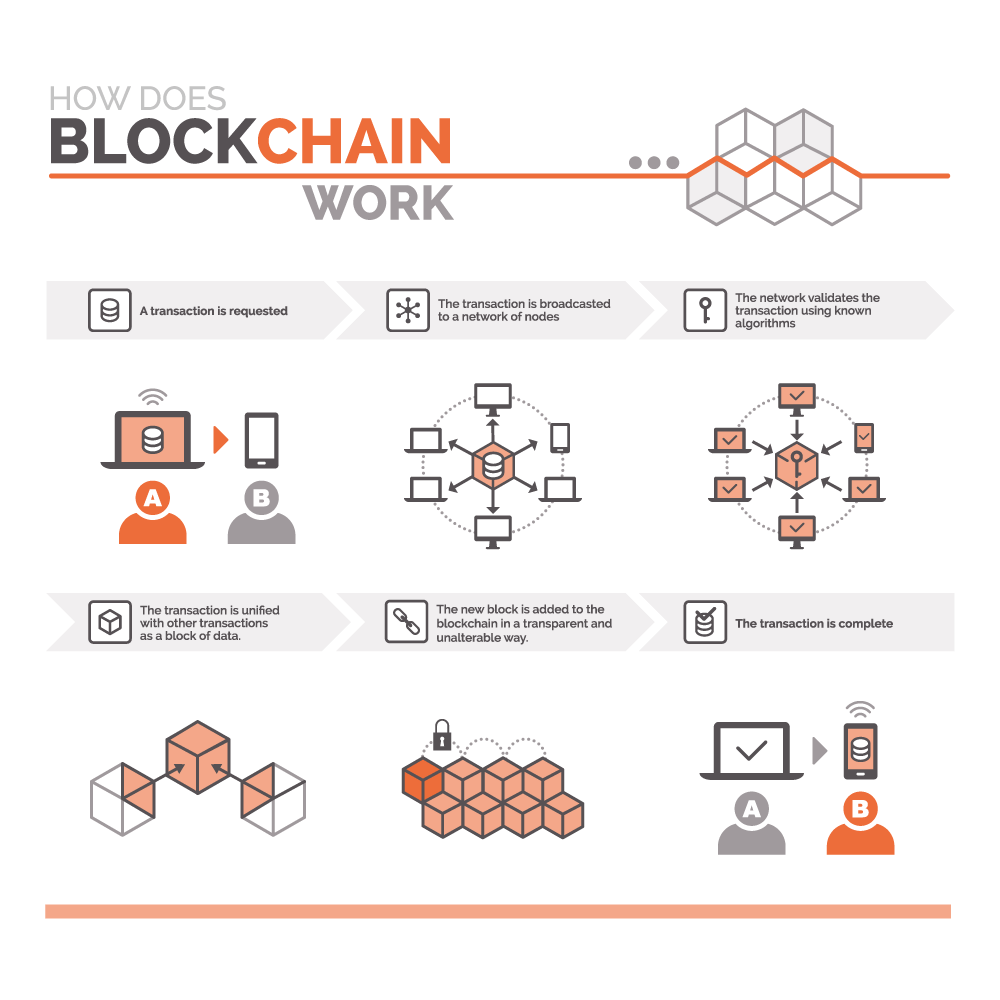
The immutable and distributed nature of this technology negates the need for database backups. As soon as information is added to the blockchain, it is transmitted to the entire network and stored on all its nodes (computers). If one node is affected by an accident or unauthorized access, the information can be easily recovered.
- Document management improvement
Movement of goods in international trade is associated with specific events in the supply chain and is reflected in the paper document flow. Goods move from the seller/exporter to the buyer/importer in exchange for cash. The flow of goods and cash is supported by a bidirectional flow of factual data, which can potentially be short pieces of information about traditional documents (for example, invoices, delivery notices, bills of lading, certificates of origin and import/export declarations filed with regulatory authorities).
The use of electronic document management (electronic execution of the process of tracking the movement of goods) and payments in the form of a distributed entry in the blockchain registry allows you to provide the following important functions of the supply of goods in international trade:
- guarantee of certificates and authenticity of goods;
- preservation of the declared value of goods for the purposes of insurance, payment of duties and fees;
- guarantee of payment for contracted cargo, protection of goods during transportation (for example, integrity of packaging, condition of the vehicle and container, etc.);
- integrity of information used by regulatory authorities to assess risks, determine inspections and permits, as well as information about trading companies (traders) and service providers involved in trade transaction.
- Tracking and control of suppliers
In modern market conditions when the possibilities of goods supplying hiding their names are exceptionally high, the possibility of checking the sources of supply becomes of high importance. Each company must track the supplier from its source, each screw and each component. Thus, each product participating in the transaction can have its own history stored digitally. In addition, the system can be configured the way each supplier does not need to contact a central authority to perform transactions, each transaction will be protected by encrypted data. Blockchain technology allows entrepreneurs in various countries to create transactions in computer systems. These transactions cannot be modified because they are signed in many secure ways and have an execution date.
Smart contracts in international trade
Transactions in international trade are made on the basis that the delivered goods have the quality and country of origin fixed in the contract. Buyers do not have a reliable way to verify the authenticity of suppliers’ statements. This increases dependence on the need to conclude and execute long-term and large contracts with established players and creates natural barriers to entry into the market of new and smaller suppliers, which in turn damages real competition.
One of the most serious disadvantages of the functioning of many global supply chains is the loss of time and the high cost of effort required to collect accurate information about the location, condition and estimated time of arrival of goods in the supply chain. The use of blockchain to track the movement of goods in transport systems provides an easy-to-implement «data pipeline» that allows all authorized stakeholders to access the same accurate information in real time. This, in turn, contributes to faster and better decision-making by stakeholders throughout the supply chain. As in other systems, access to information can be controlled using user profiles that specify access rights for each participant to ensure that information about competitors will not be shared with companies that do not have the rights to do so.
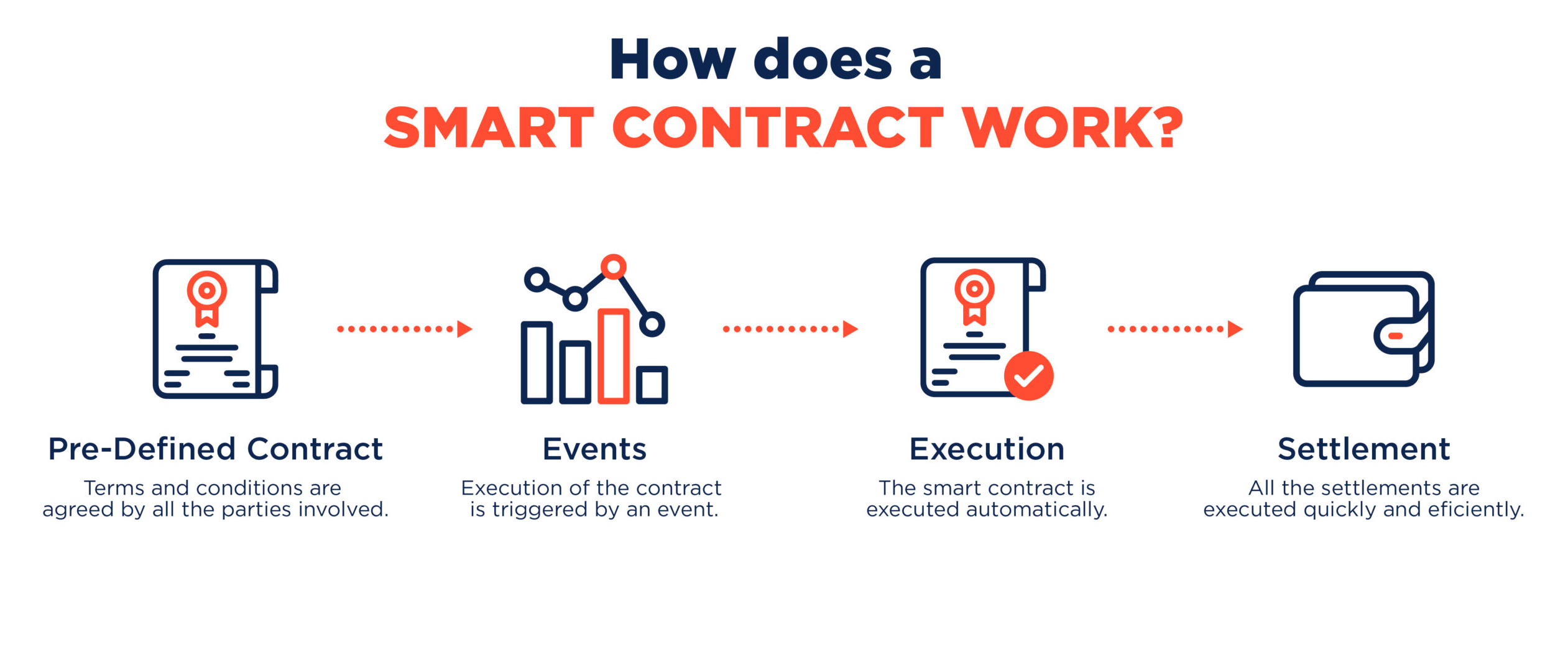
Significant advantage of the introduction of blockchain technologies into the supply chain of goods is the possibility of increasing the speed of capital turnover when using smart contracts. These contracts are in the blockchain, while the participants of the transaction see and sign only the part that is relevant to them. When using a smart contract, it may indicate that when the goods cross a certain point and the customs authorities allow their import, the money is immediately transferred from the recipient’s bank to the sender’s bank — without delay and long waiting.
Such opportunities allow us to rethink the entire business system, since the fulfillment of many contractual obligations occurs through program code. Due to the existence of the only reliable option in the register, the costs of checking potential partners will be sharply reduced, many disputes will cease to arise, and the circle of participants in the economic process will expand dramatically. When using blockchain, the need to manually follow the «trust but verify» rule and all the costs associated with it will most likely become a thing of the past.
Smart contract is a computer code that automatically executes all or part of the agreement and is stored in the blockchain. We can say that smart contracts are software codes that embed the terms of the contract and that work on the network, leading to partial or full automated self-fulfillment. When using them, the amount of paperwork is significantly reduced, and fraud and various risks are eliminated altogether.
The automated execution of the contract is provided as a result of the translation of contractual terms into an algorithm or technological operations based on rules that signal the actions of one of the parties, first of all, payment for goods. After initializing the partner’s action, the results for which the smart contract is encoded cannot usually be stopped (unless the result depends on an unsatisfied condition). Smart contracts are automatically executed without the need for any involvement of a third party (for example, an intermediary), which leads to a reduction in transaction and legal costs, the value of which can be huge for the participants of the transaction. Smart contracts can facilitate the execution of many different processes and operations, the most obvious of which is payment and the actions caused by this payment. For example, by making the control over the collateral dependent on whether the debtor has decided to repay the loan within the agreed period, the program can automatically make the appropriate decision.
Smart contracts allow you to reduce cross-border costs when concluding and executing contracts, as they replace the work of intermediaries with paid services. All documents entering the blockchain are encrypted, so the information cannot be changed, stolen or corrupted by intruders. The blockchain has the function of multiple duplication and storage of information in separate links of the chain. A huge number of copies are created, so no problems can harm the terms of such a contract.
Digitalization of financial and economic relations
Another important tool for the transformation of world trade is the digitalization of financial services, which reduces the cost of transferring funds between transaction entities operating in different countries using digital financial assets (CFAs).
Their application and use become especially relevant in the context of sanctions against the Russian Federation. A special place should be given to creating a secure channel for the transfer of official monetary payments, bypassing the Western banking system. This will allow solving the problems of international transfers in case of any serious force majeure circumstances.
Based on the analysis of existing draft laws on digital financial assets and information on their discussion by interested parties, a number of conclusions can be drawn. Firstly, the legislation regulating the issue and circulation of such assets will be similar to the legislation regulating the issue and circulation of securities. Secondly, when they are issued and circulated in the country, the existing stock market infrastructure will be used, which will significantly reduce transaction costs. Thirdly, most likely, the domestic infrastructure of this segment of the financial market will be used by issuers as an auxiliary one. This is due to the fact that the main institutional investors who give this market the main liquidity are already working on proven blockchain platforms. Fourth, these regulations are clearly insufficient for full regulation of the digital segment of the financial market. It will be necessary to additionally adopt several dozen more regulatory documents that will clarify the issue of digital financial assets and their circulation.

GBLedger is a unified blockchain platform for smart contracts using digital financial assets
It is already necessary to think about the implementation of a reliable solution in this area. GBLedger is a universal blockchain platform developed by Genesis Block.
It allows you to create a system with services that can work both as part of a single ecosystem and separately, including in cloud mode, and also implements the ability to automate payments to customers and simplify financial processes at all stages of the relationship between the customer and the supplier.
GBLedger has the ability to issue digital assets, their accounting, transfers, create smart contracts and integrate with any third-party information systems. An important factor in the reliability of the system is that it is fully ready for certification in Russia according to the requirements of Russian legislation.
Planned applications of the GBLedger system in the digital economy:
1. Unified system for conducting trade operations of economic entities using the digital ruble.
2. Platform for trading digital financial assets, independent of CFA issuers
3. Platform for settlements under international contracts using digital financial assets and clearing in local currencies of the parties to transactions.
4. Platform for registering and monitoring the execution of smart contracts using digital assets.
Stages of work of smart contracts in the GBLedger trading system
Stage 1: Registration in the GBL system takes place after registration on the platform when choosing the option to work with a digital ruble and a smart contract. The contractor registers in the blockchain system and enters the data necessary to work with the counterparty.
Stage 2: The authorized user of the platform selects the customer (contractor) according to the required parameters.
Stage 3: According to the results of the conclusion of the contract, its parameters are entered into a smart contract that automatically fulfills these parameters, including payment of expenditure items of the contract, such as salary, deductions and advance payments for taxes.
Stage 4: The preliminary deposit of the digital ruble (or the obligation to supply it) for the execution of the contract is carried out in correspondence with ordinary settlement accounts with the participation of a settlement center — a non-bank credit institution.
Stage 5: As the parameters recorded in the smart contract are fulfilled, the system initiates disbursements of funds and controls the flow of funds within the framework of the executed contract.
The capabilities of the GBLedger platform in the system of settlement and control of deliveries under foreign economic contracts allow:
- To organize a system of conducting foreign economic activity and making settlements in a closed circle of participants with simplification (partial removal) of existing restrictions under the control of interested ministries and departments.
- Exclude currencies of unfriendly countries from settlements.
- Make international transactions between Project participants transparent to the System Operator (involved authorities) and opaque to an external (unfriendly) observer.
- To introduce into the subject part of international contracts not only the digital ruble, but also digital financial assets of various issuers, based on the use of smart contracts and its own settlement center for foreign currency transactions.
GBLedger can be used to organize work in various fields of economics, finance and trade, ensuring high speed of data transmission, confidentiality and transparency of information in accounting and identification of contractor organizations.
Conclusion
The growth in demand for new technologies is spurred by increased market competition: those companies that start using revolutionary technologies earlier benefit from them more than others. Being a powerful trust tool, blockchain allows parties to exchange data and services or make payments with a high level of trust. In the course of history, scientific and technological achievements have dramatically increased the level of self-confidence due to the emergence of such innovations as paper money, the banking system, the printing press, electronic payment systems, the Internet and secure electronic commerce. Each of these achievements stimulated economic activity by creating systems that instilled the trust necessary for the parties to work together. As a result, blockchain technology has been used by industrial and trading companies, scientific organizations and governments in many countries of the world. The possibilities of using blockchain go far beyond the digital sphere of industry and trade and can have an impact on all aspects of the real economy.
Use of blockchain technology will be able to change international trade if favorable conditions are created for the active development of this technology. Blockchain can make international trade «smarter», but «smart» trade requires «smart» standardization, which is possible only through the cooperation of business and authorities. GBLedger is able to implement an ecosystem that contributes to the more active development of the blockchain and change the ways and approach to the relationship of participants in international trade.
You can download the presentation of GBLedger’ capabilities as a system of settlement and control under foreign economic contracts by the link >>>
Читайте также:
>>> О КОМПАНИИ GENESIS BLOCK:
Компания Genesis Block – международный системный интегратор и разработчик финтех-решений, систем платежей и процессинга, систем биллинга и программных решений для ЖКХ, блокчейн-решений, веб-сайтов, порталов и мобильных приложений. Под брендом Genesis Block объединены компании, разработчики и сервисы, работающие на рынке с 2010 г. Качество наших сервисов подтверждается международной сертификацией по ISO. Входим в российскую ассоциацию программного обеспечения НП РУССОФТ. Genesis Block является постоянным главным спонсором и спикером на международных банковских и финансовых конференциях IFIN и ВБА (Вся Банковская Автоматизация). Аккредитованная IT-компания Минкомсвязи. Является членом РАКИБ (Российская Ассоциация Криптовалют и Блокчейна). С 2020 компания Genesis Block ведет собственную авторскую передачу на деловом телевидении ПРОБИЗНЕС. Являемся авторизованным официальным интегратором крупнейшей BPM / CRM системы Terrasoft.


